
PugJesus
- 17 Posts
- 44 Comments
 3·3 hours ago
“hide of a wild beast” is unfortunately as specific the histories go.
the proper way is to do a hostile takeover of the Democratic party.
so, we need to do the same with the DNC. the formula is simple. hijack the primaries, shove the existing leadership out and show the Republicans what “socialism” really means.
Amen.
 1·6 hours ago
The Black Panthers weren’t even formed until the greatest victories of the Civil Rights Movement had already been won, and for all of Malcolm X’s rhetoric before leaving the Nation of Islam, the threat of violence from Black Nationalists was not a core factor to the victories of the Civil Rights Movement.
MLK Jr. spent nearly a decade and a half building organizations and connections for nationwide resistance.
Letting Palpatine assume power is not really an alternative.
You can care about the Palestinian genocide, while acknowledging that of the two choices you have, “No fascism at home and genocide in Palestine” and “Fascism at home and increased support for genocide in Palestine”, the former is considerably preferable, and there’s no real moral reason for letting the latter come to pass.
“I face obstacles too, you know”
Kind of sounds like you’re asserting someone’s view is right or wrong.
You’re thinking of the Revolutionary War. In the US Civil War, the Second French Empire was friendly towards the Confederates, not the Union.
The graph is saying “As millennials get older, the debt increases”
Time axis, but millennial focused




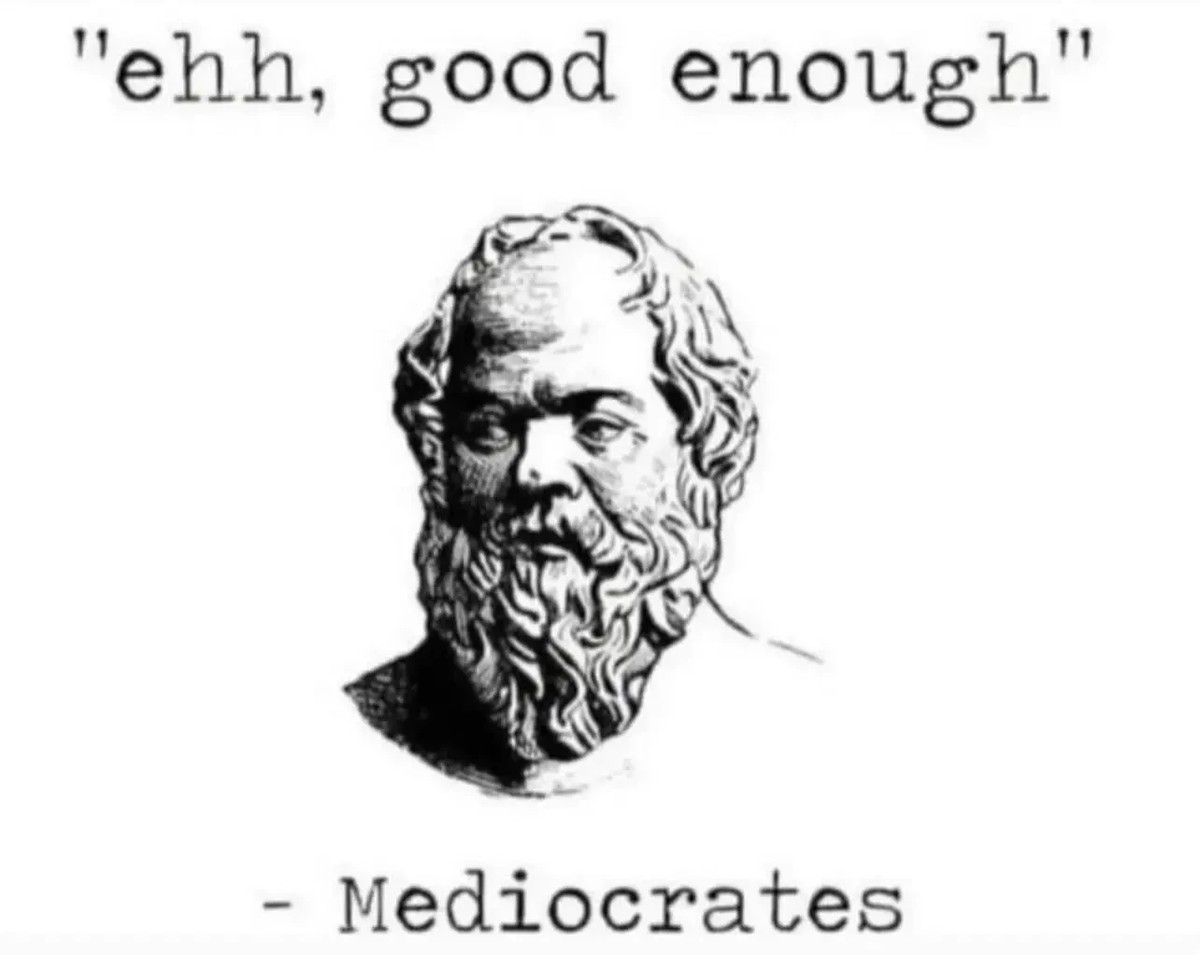
Can I get some serotonin
Maybe if people could learn that their views are not the only views, and that other people’s views are not necessarily right or wrong, in the whole wide world, maybe fewer people would be motivated to “become terrorists”.
I’m not sure that “God wants me to have your land” is an “Agree to disagree” moment.
The meme became very widely used outside of /pol/ and rarely criticized on ‘racist’ grounds.
Like, I’ll be one of the first to condemn Hamas as actual terrorists, attacking civilian targets to spread terror and taking civilian hostages.
… but the appropriate response to that is not to murder every civilian in the other country. And anyone who believes that Israel’s behavior is a response and not an excuse for the long-standing ambition of the Israeli right’s dream of genocide is not paying attention.
The virtuous circle - more murdered people makes more enemies, which makes more excuses to murder people.
It’s perfect. Nothing could ever go wrong with it.
I’m guessing you don’t go to many country music festivals.
Well, no, my family tree isn’t a circle
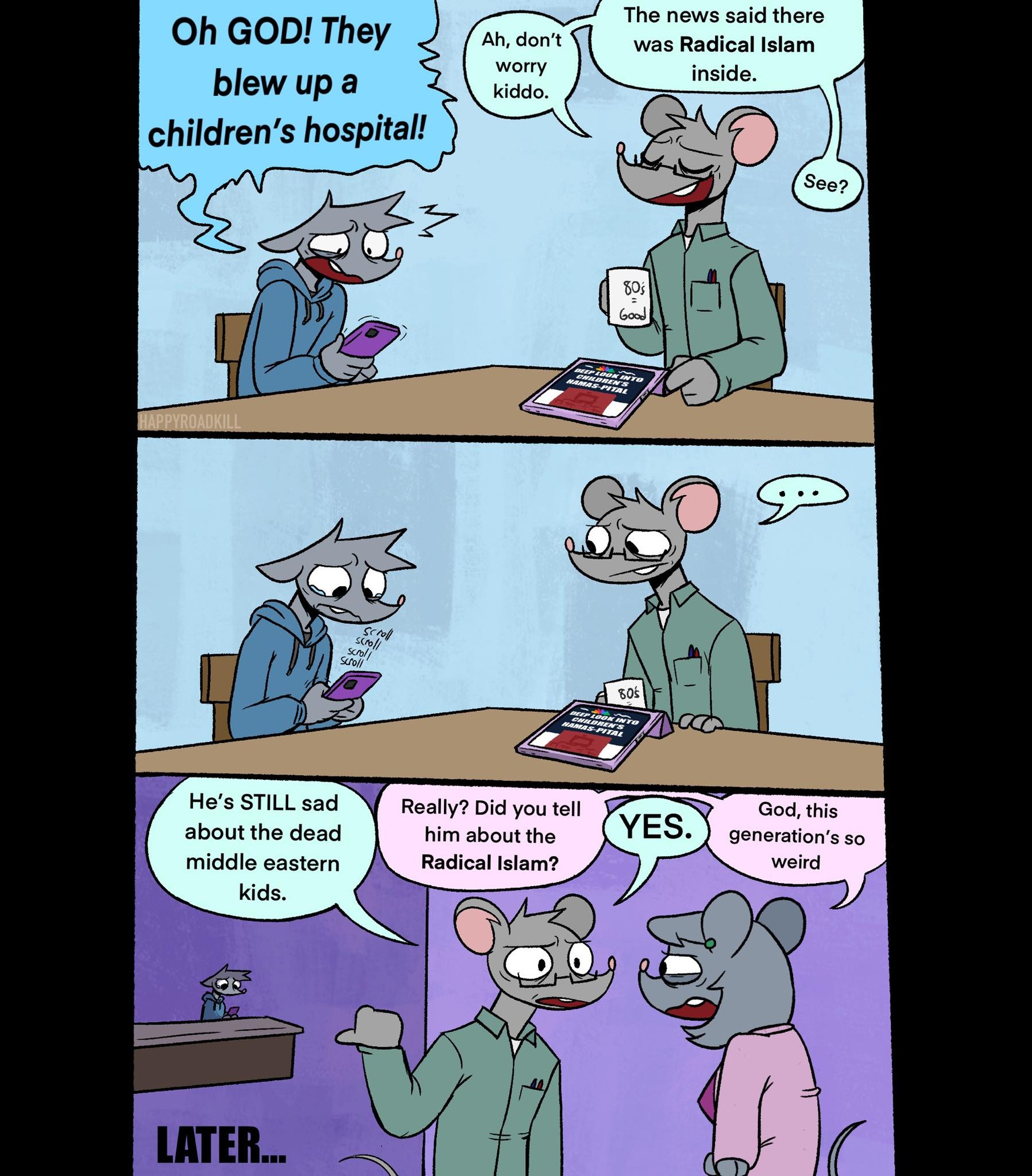
As we all know, being sick while under the influence (of radical Islam) is hazardous to your health?





God, what a bizarre route for the old expanded universe that was.